

Bringing an intranet vision to life for a UK local authority
Role: Lead Service & UX Designer (freelance)
Outputs: Service storyboards and high-fidelity vision concepts
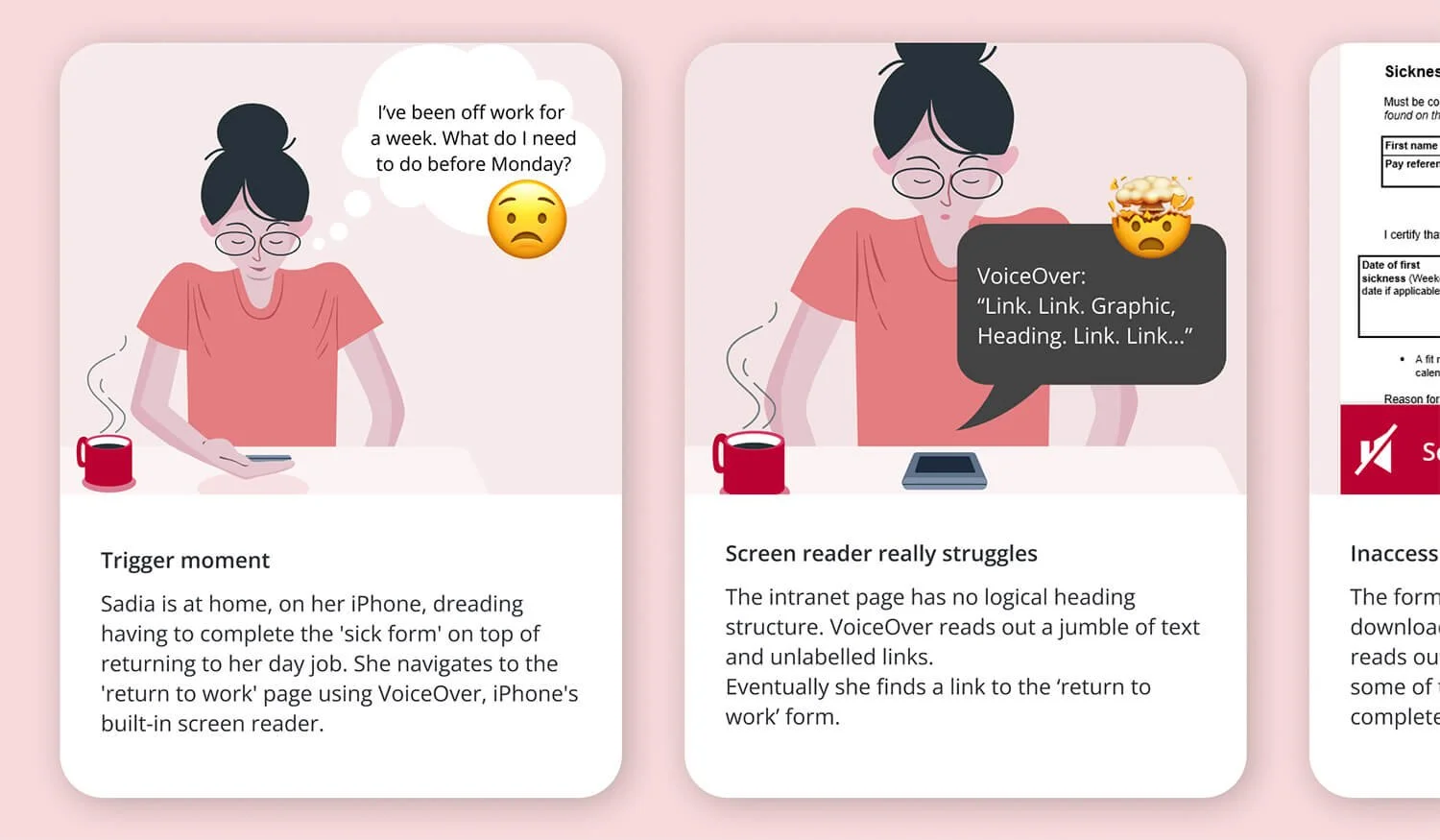
One of five storyboards built from user research, showing how the current intranet failed colleagues who rely on assistive technology.
Research first, platform second
A large UK council’s digital team was taking an evidence-led look at its staff intranet. Rather than jumping to a new platform, they wanted to understand what colleagues needed first. They had already explored 29 common tasks and distilled the findings into five themes. The next step was to make that research tangible: to support a business case for the next phase, and to share the vision with colleagues.
-
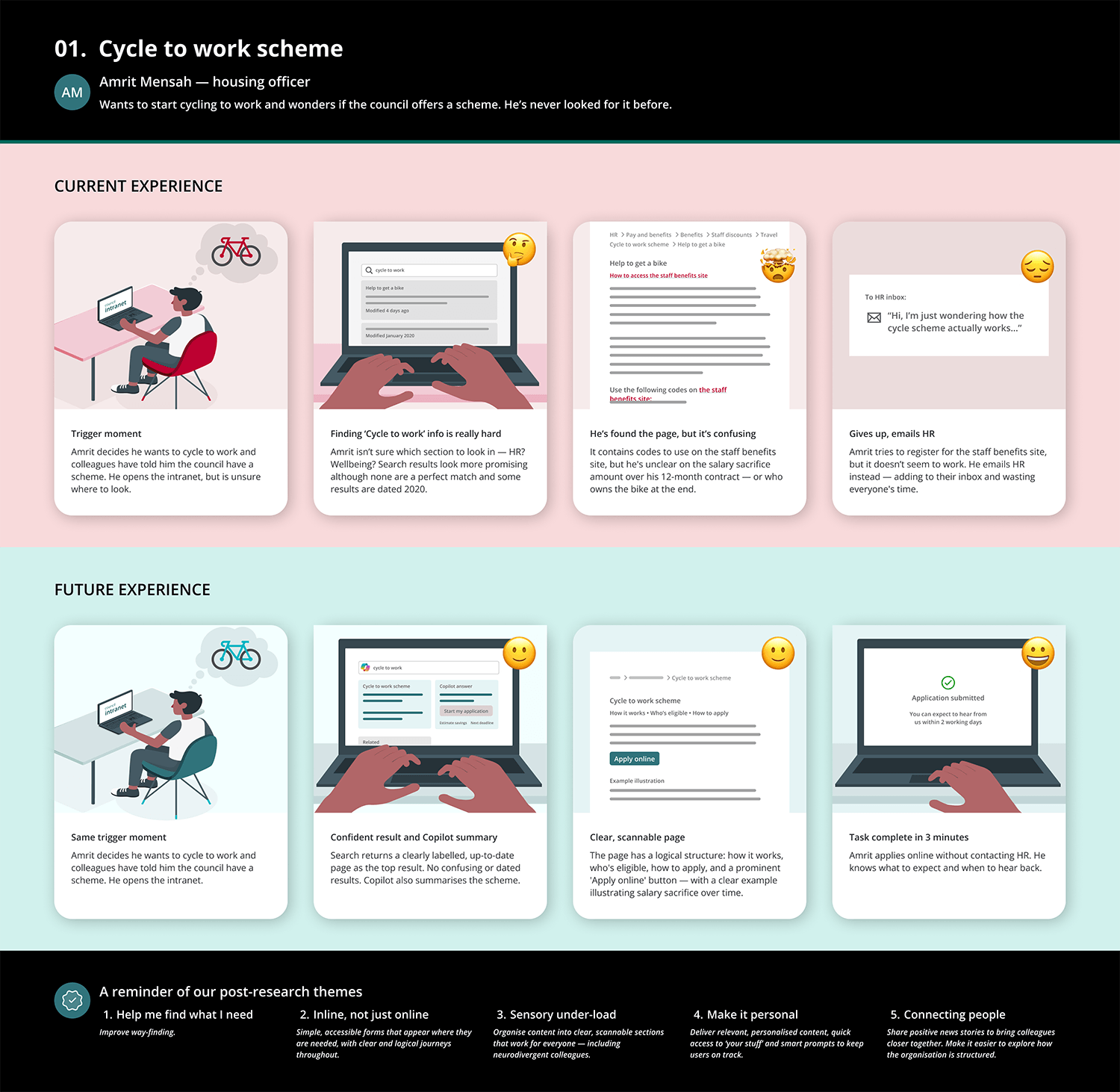
![A storyboard depicts how a council's cycle to work scheme could be improved for colleagues]()
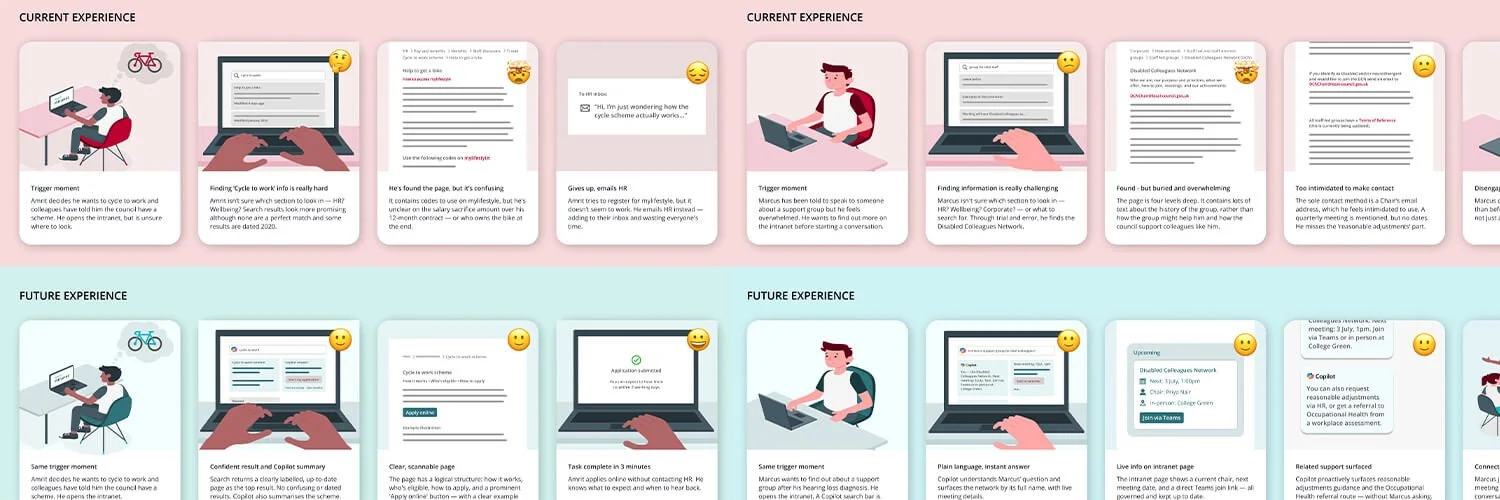
Cycle to work scheme - 'before and after' storyboard
-
![A storyboard depicts how a council's returning to work after sick leave could be improved for colleagues]()
Returning to work after sick leave - 'before and after' storyboard
-
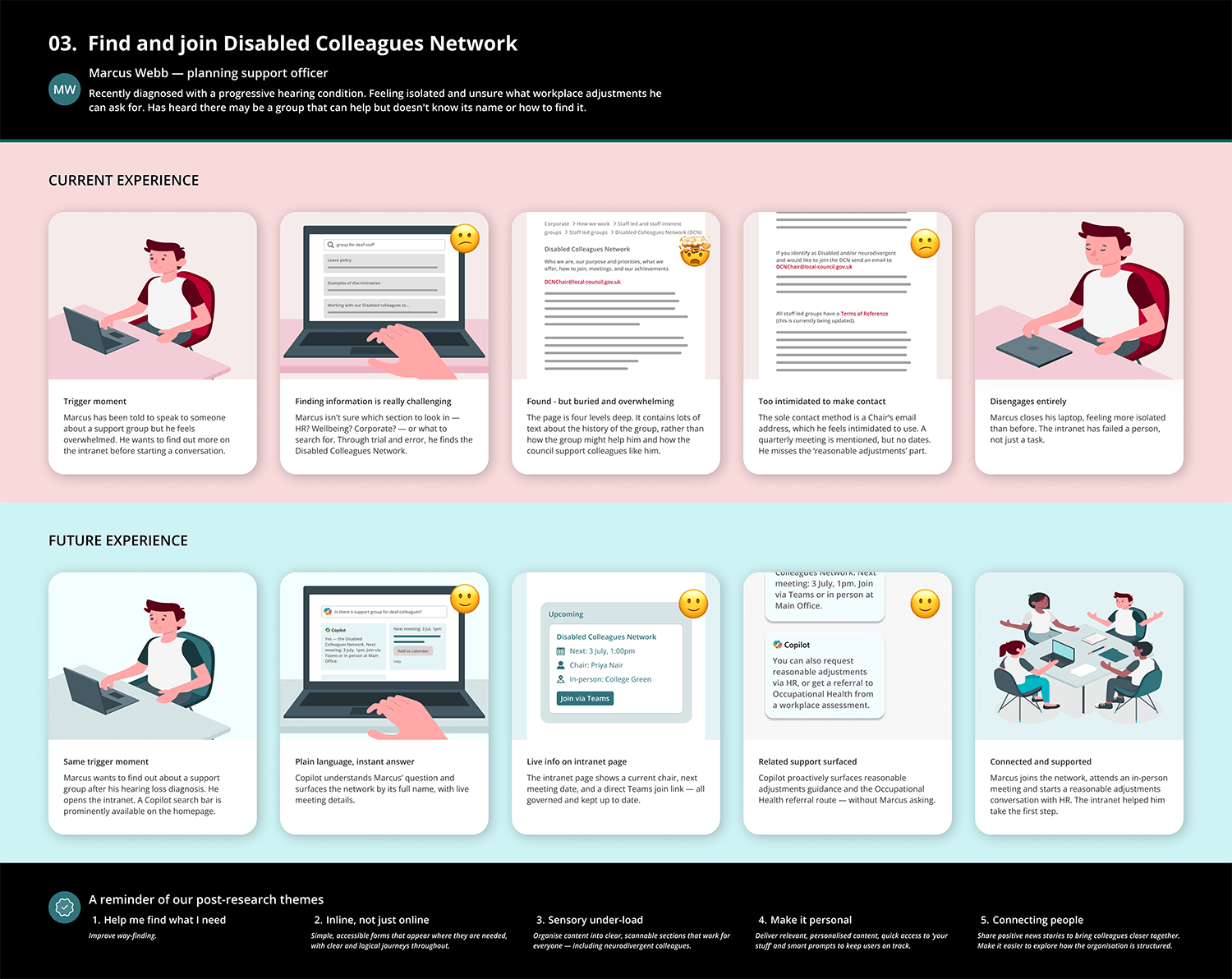
![A storyboard depicts how a council's process for joining a Disabled Colleagues Network could be improved for colleagues]()
Find and join a Disabled Colleagues Network - 'before and after' storyboard
-
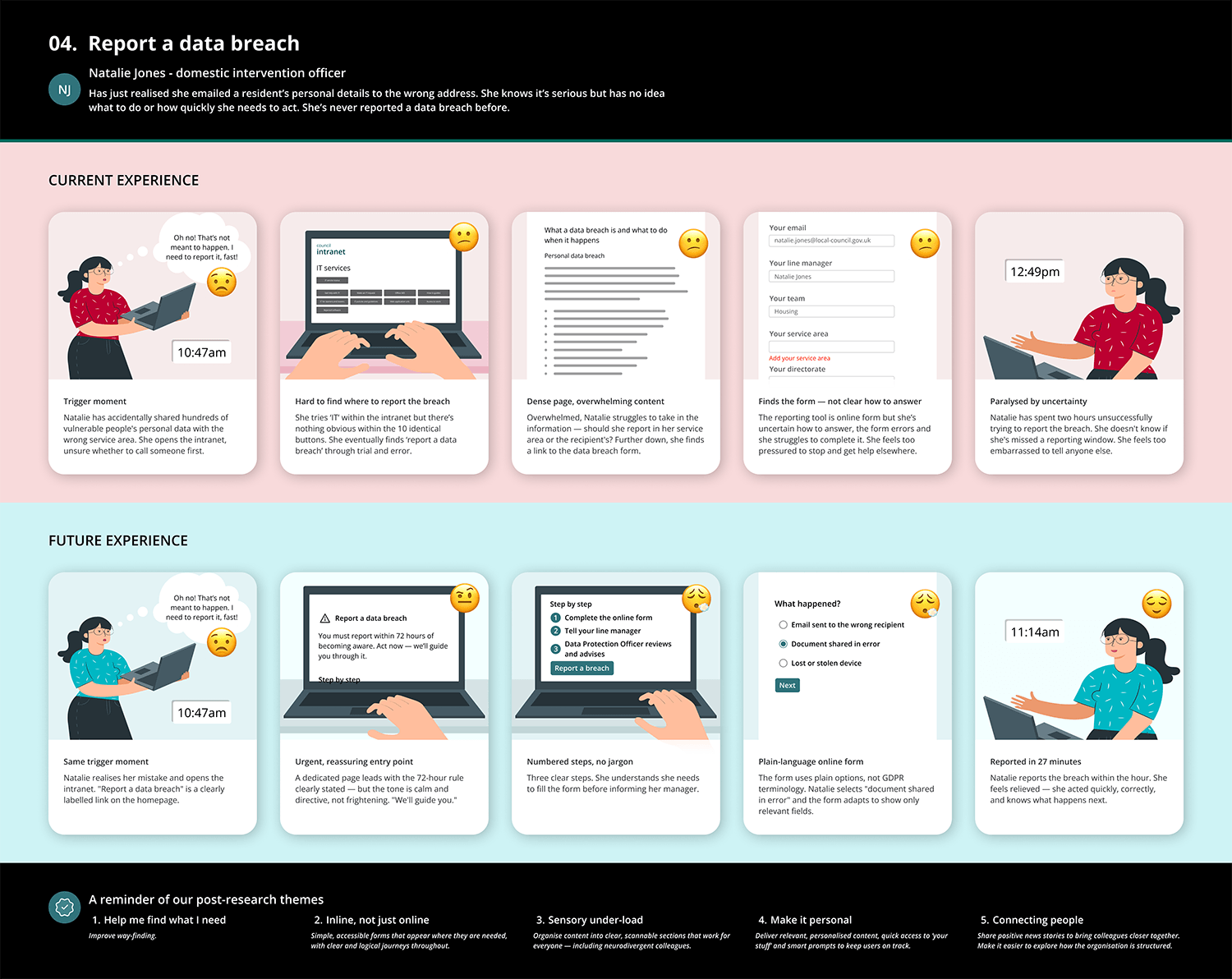
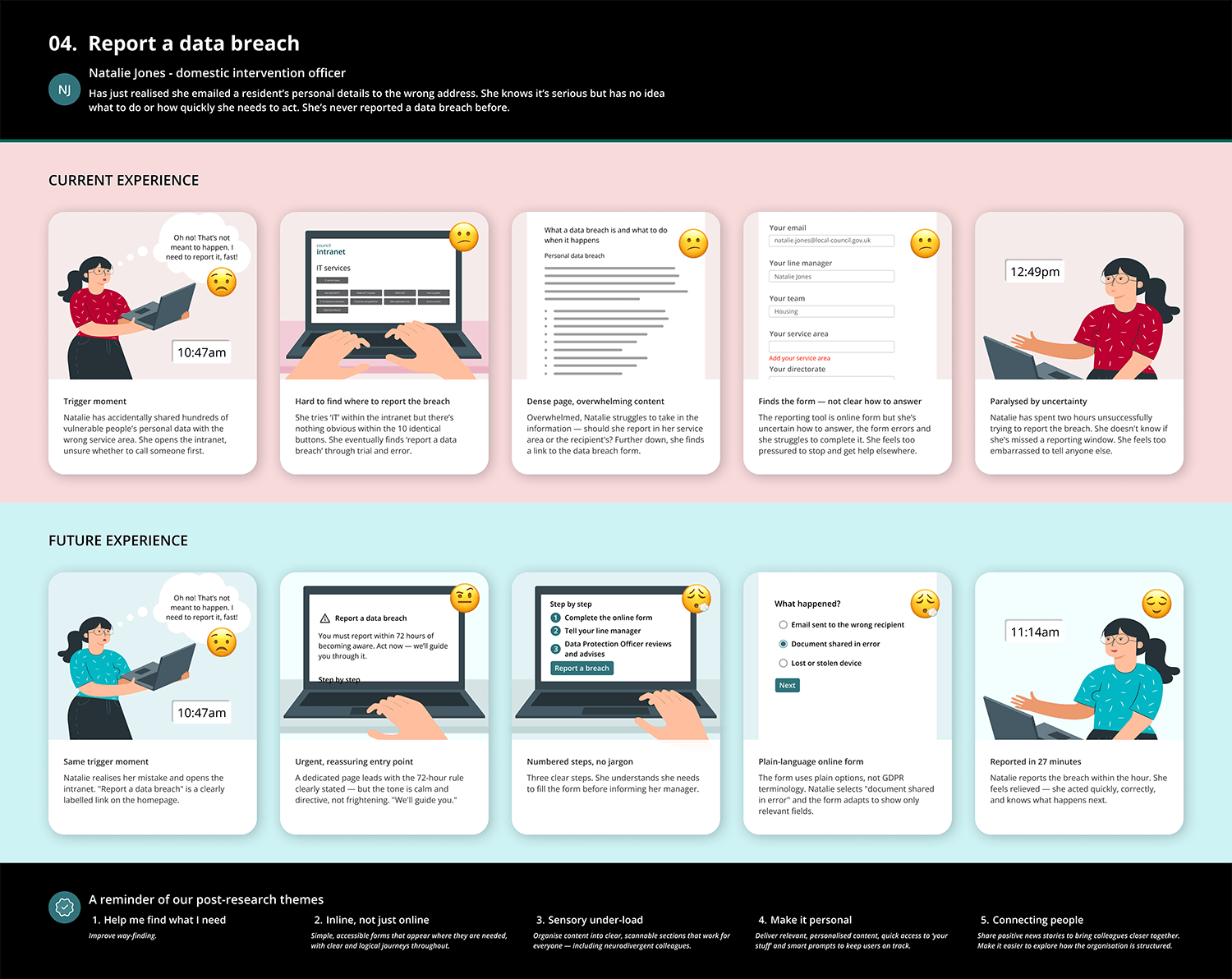
![A storyboard depicts how a council's process for reporting a data breach could be improved for colleagues]()
Report a data breach - 'before and after' storyboard
-
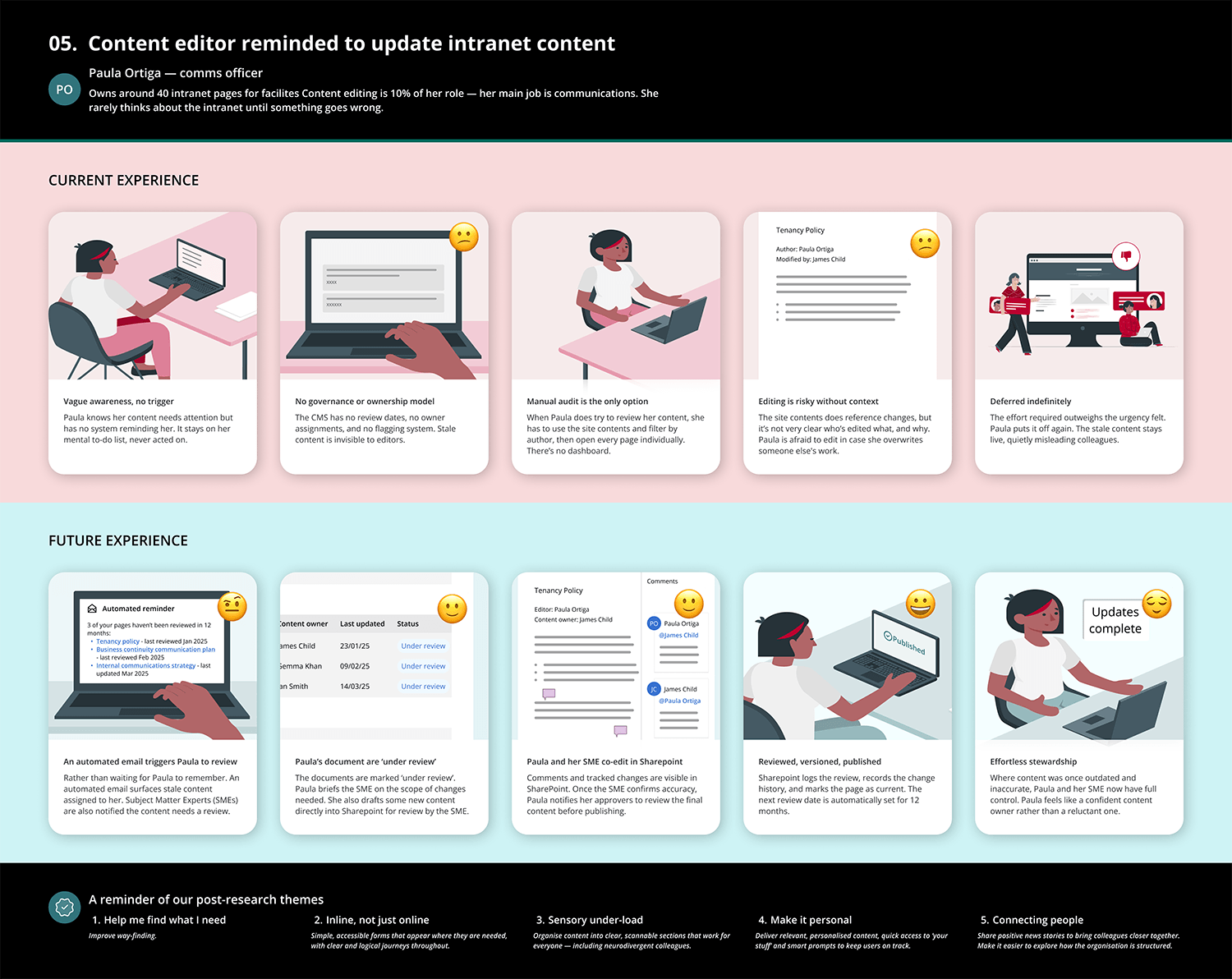
![A storyboard depicts how keeping a council's Intranet content up to date could be improved for editors]()
Content editor reminder to keep content current - 'before and after' storyboard
From storyboard to screen
Working closely with the team, I chose five everyday scenarios and created a “before and after” storyboard for each, starting from the same moment, so the value of change was clear to non-specialists at a glance. Every future journey was grounded in the five research themes, with accessibility and inclusion at the centre.
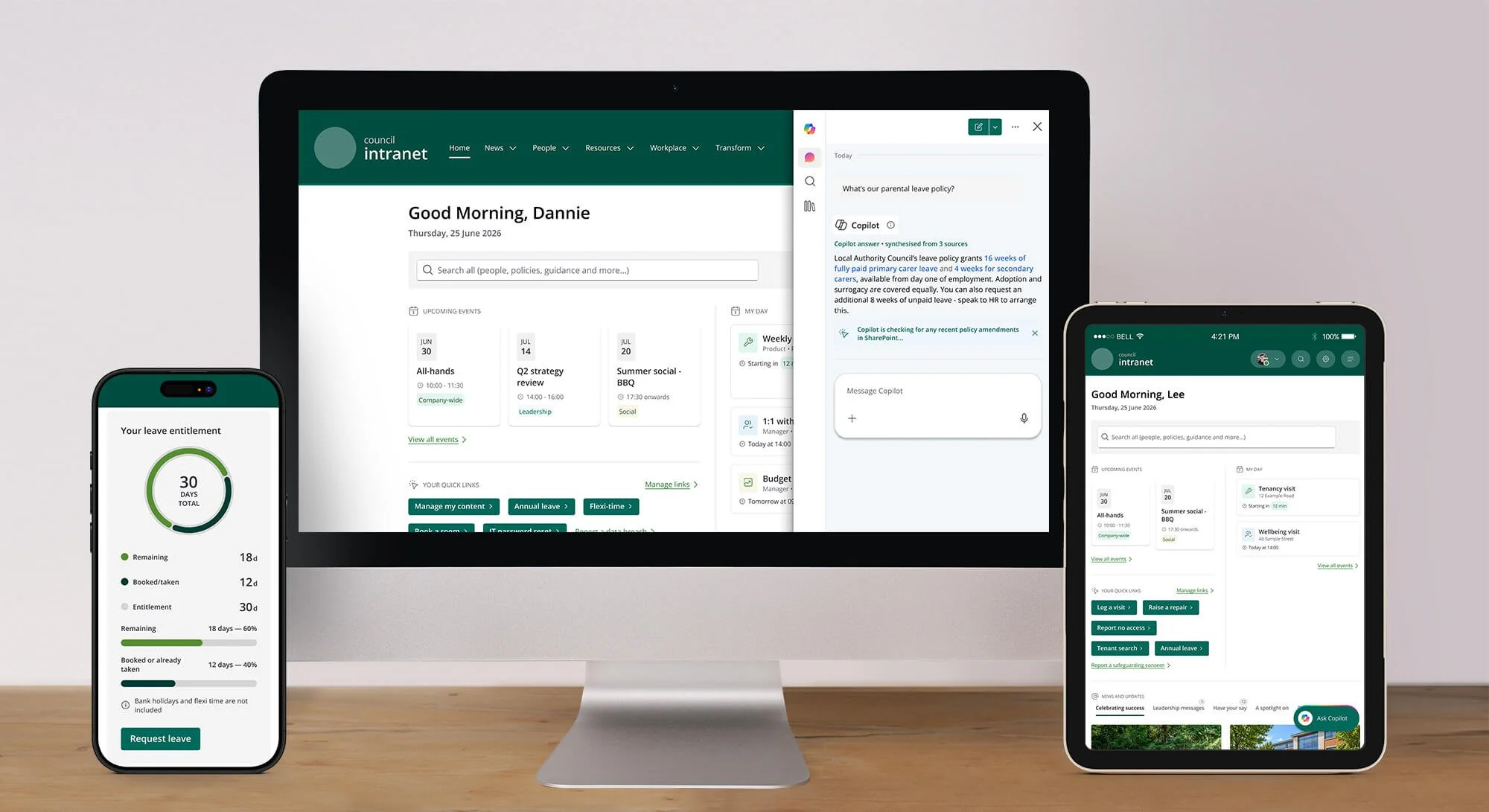
To show what the future could look like, I built on the team’s early exploration of what was possible with their existing tools. I then produced high-fidelity concepts: a personalised homepage, mobile and tablet access for field-based staff, and Copilot answering questions in plain language. All outputs were designed to WCAG AA contrast.
High-fidelity concepts brought the research themes to life: a personalised homepage, Copilot answering questions in plain language, and a layout that works on any device.

The conversations didn’t stop with the storyboards.
A shared language for change
The storyboards went on to support the council’s business case for the next phase of work, and prompted further conversations about what the intranet could become. They gave the team a shared, human way to explain why the intranet mattered: not just as a tool, but as part of how the council supports, includes and protects its people.
Five everyday moments.
One case for change.